Micro-breaks at work: what research says and how to introduce them
Ten minutes or less, several times a day. A meta-analysis measured what these breaks really change, and what they do not.
BlogUnder pressure
The word is everywhere, its definition far less so. The three dimensions used by the WHO, and the exact role of a manager.

Burnout: the word is used for a busy week as much as for a collapse lasting several months. That confusion helps no one. It trivialises serious situations and causes needless worry about the others.
Yet a precise definition exists. Knowing it helps you spot the signs earlier, in yourself and in your team.
The World Health Organization included burn-out in the eleventh revision of its International Classification of Diseases in 2019. It classifies it as an occupational phenomenon, and specifies that it is not classified as a medical condition.
According to that definition, burn-out results from chronic workplace stress that has not been successfully managed. It is characterised by three dimensions: feelings of energy depletion or exhaustion, increased mental distance from one’s job or feelings of negativism or cynicism related to it, and reduced professional efficacy.
The WHO specifies that the term refers to phenomena in the occupational context and should not be used to describe experiences in other areas of life.
Health Promotion Switzerland regularly measures stress among working people. In its 2022 survey, 30.3% of working people said they were emotionally exhausted, and 28.2% were in the critical zone, with clearly more demands than resources.
The same survey estimates that work-related stress costs the Swiss economy around CHF 6.5 billion a year.
The weekend is no longer enough, nor are holidays.
A committed person becomes cynical, withdraws, stops suggesting anything. This is often the sign colleagues notice first.
Things forgotten, delays, difficulty concentrating in someone who is normally reliable.
“I have noticed you have been less present in meetings these past few weeks. How are you?” One observed fact, one open question.
Revisit a deadline, reassign a task, set a follow-up point. That is your remit.
You are neither a doctor nor a therapist. If the situation goes beyond workload, refer to human resources or a health professional.
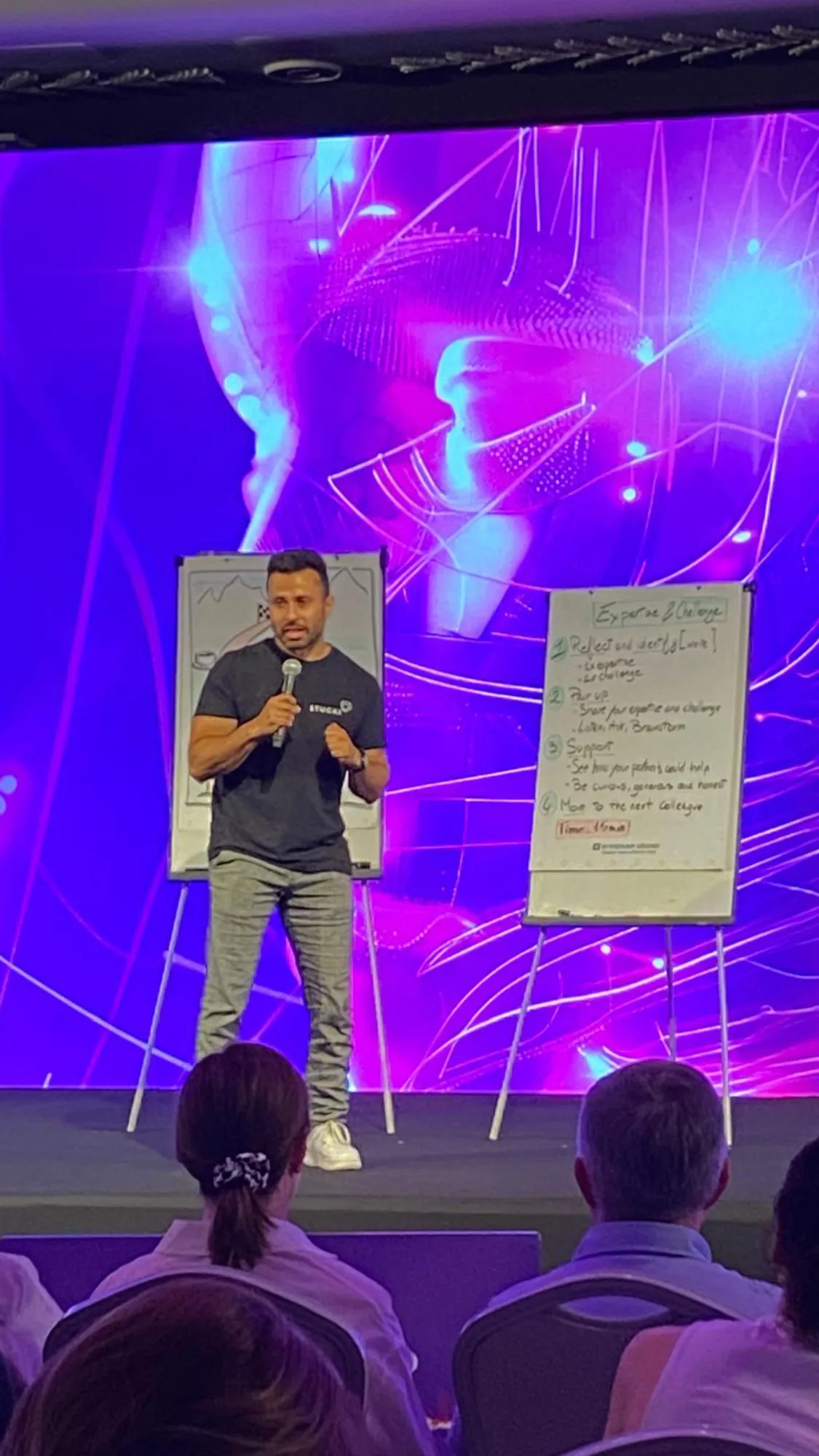
The conversation with an exhausted team member cannot be improvised. In the 2-hour workshop for managers of Thriving under pressure, your managers practise listening without minimising or dramatising, clarifying what is urgent and deciding on a concrete next step.
I play the team member, and everyone can replay the exchange. Explore the workshop and the masterclass, then book a 30-minute call.
Let’s talk about your situation.
A first 30-minute call to clarify your need and the format that would suit your team.
The author
Bertrand COMTE is a consultant, trainer and actor based in Lausanne. Founder of VitaMind, he works in-company in Lausanne, Geneva and across French-speaking Switzerland with executives, B2B sales teams and corporate programmes, in English and French.
Discover his backgroundRead next
 Under pressure
Ten minutes or less, several times a day. A meta-analysis measured what these breaks really change, and what they do not.
 Under pressure
Sleeping little still passes for a sign of commitment. What specialists recommend, and what your organisation can change.
 Under pressure
Eight hours sitting, then a workout on Saturday. What the WHO recommends, and how to slip movement into an already full day.