
Role-play in sales training: why replaying the scene changes everything
Salespeople hate role-play, often with good reason. What separates an awkward exercise from practice that changes real meetings.
BlogSimulations
A good product badly told loses to an average product well presented. How to write, deliver and rehearse your pitch.

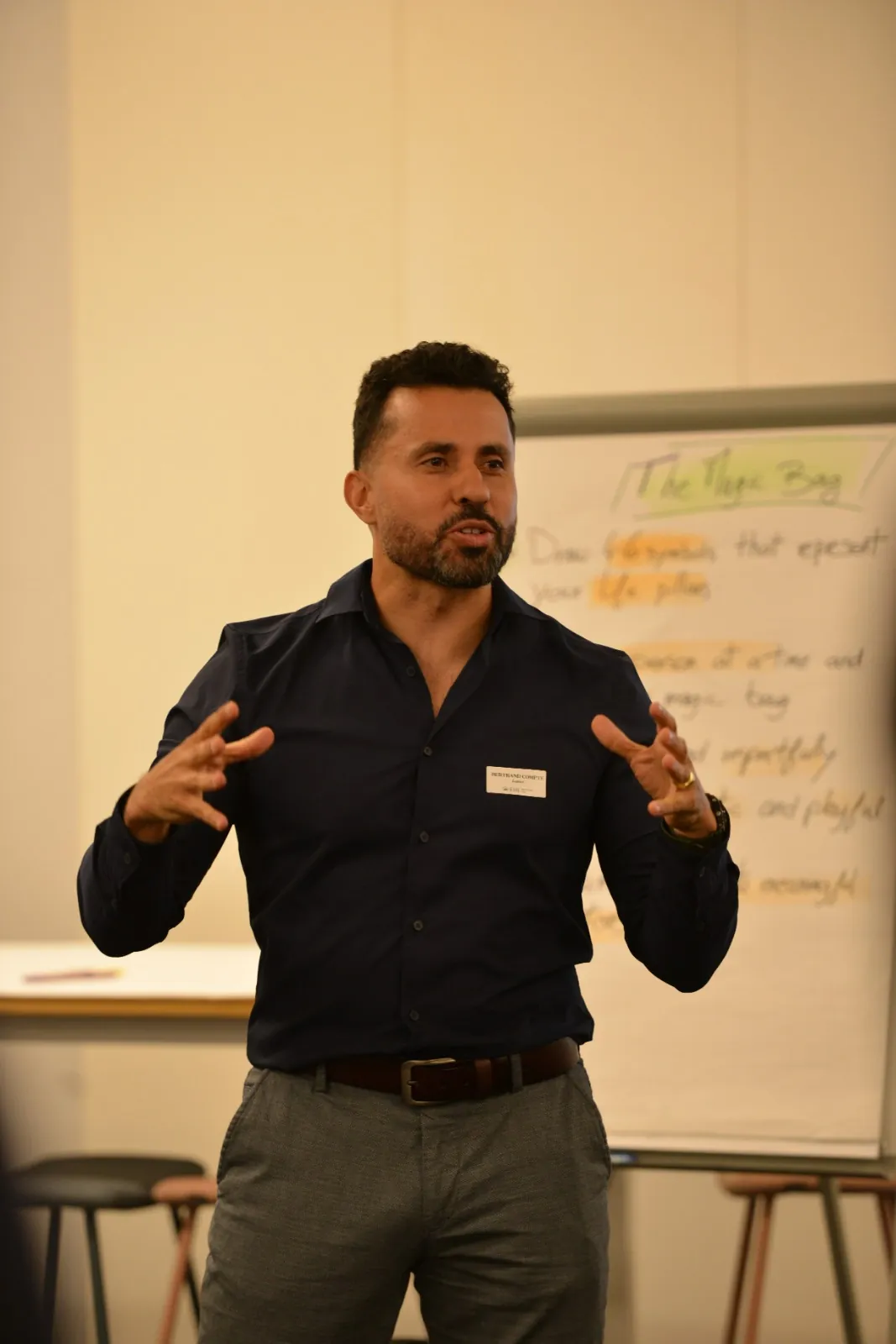
How to prepare a startup pitch: the technical founders I work with nearly all do the same thing. They spend most of their time on the slides and almost none on how to deliver them. On the day, they read their screen, speak too fast and discover the jury’s questions at the same time as the jury asks them.
A pitch is not a presentation. It is a few minutes during which someone decides whether they want to know more. Substance matters. The way you carry it matters just as much.
If your listener were to remember only one sentence, which would it be? Write that first. Everything else exists to prove it.
Start with the situation your client is living, in their words. A jury that has recognised the problem listens to the solution. A jury that has not understood it looks at its watch.
Short sentences. Simple words. When speaking, count on roughly 150 words per minute. If your text is too long for the time allowed, you will have to rush, and nobody will follow.

Nerves speed everything up. Slow down deliberately, especially on the numbers and on the key sentence.
A pause before an important piece of information gives it weight. It also gives you time to breathe.
Feet grounded, eyes on the people and not the screen, hands free. A short warm-up before you walk in changes the first impression.
Rereading your pitch in your head does not count. You have to say it, standing, in the conditions of the day.
An outside eye sees what you no longer see: the technical term nobody understood, the transition that stalls, the slide too many.
Your competitors, your numbers, your team, what could fail. Hesitant answers to questions undo more pitches than poor presentations.
At the EHL Innovation Hub, I support entrepreneurs on their strategy, the structuring of their offer and their pitch. One of them, Ramzy Rafla, sums it up like this: “When it came time to pitch, Bertrand helped us write the script, refine every detail, and rehearse multiple times.”
Defending an internal project before a committee follows exactly the same rules: one idea, one problem, evidence and prepared questions.
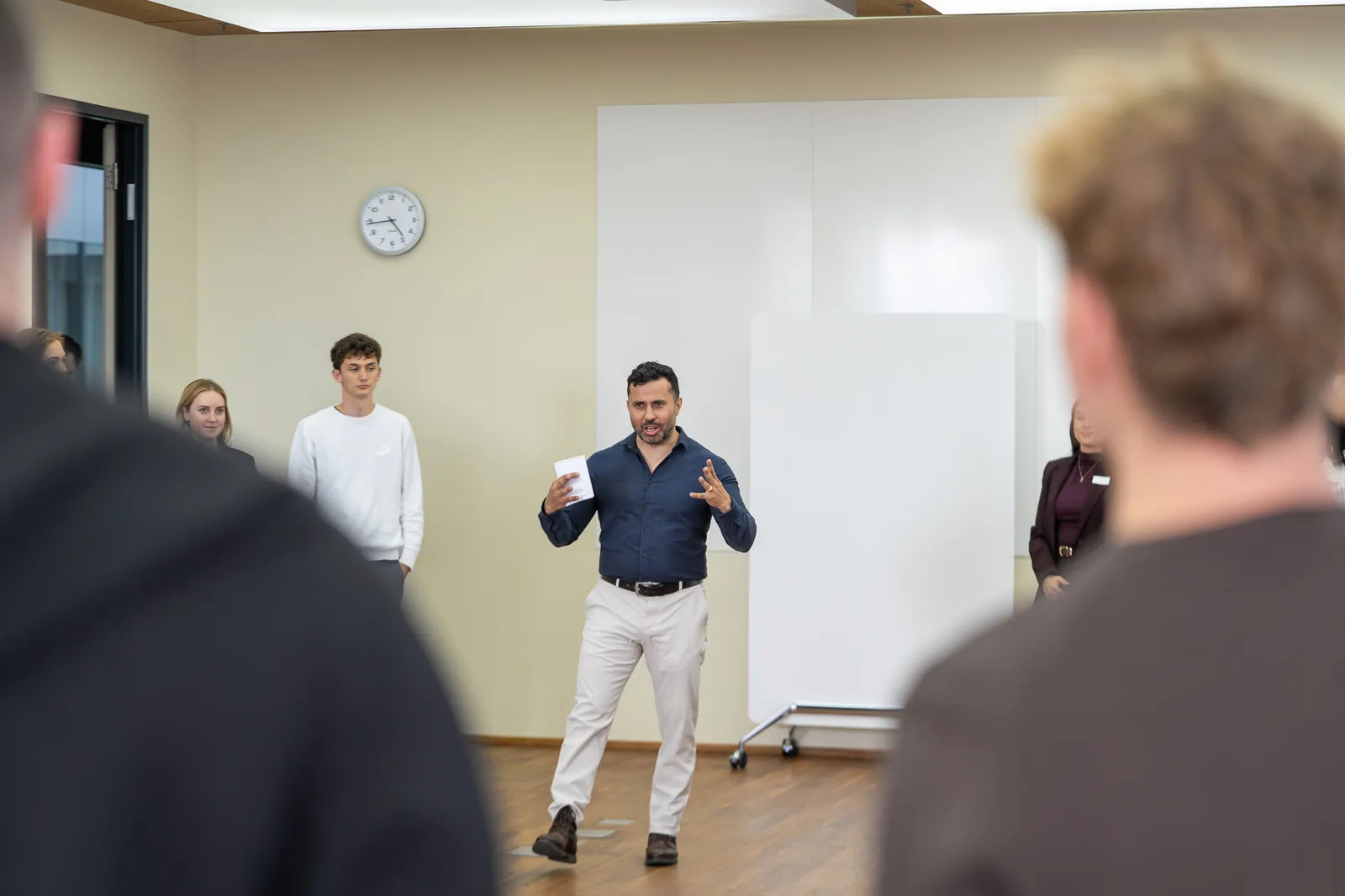
In a corporate simulation, I play the investor, the juror or the partner who asks the tough questions. We debrief one precise moment, then you replay.
Book a first 30-minute call: tell me who you are pitching to, and when, and we will set up the simulation.
Let’s talk about your situation.
A first 30-minute call to clarify your need and the format that would suit your team.
The author
Bertrand COMTE is a consultant, trainer and actor based in Lausanne. Founder of VitaMind, he works in-company in Lausanne, Geneva and across French-speaking Switzerland with executives, B2B sales teams and corporate programmes, in English and French.
Discover his backgroundRead next
 Simulations
Salespeople hate role-play, often with good reason. What separates an awkward exercise from practice that changes real meetings.
 Simulations
An athlete does not discover the match on match day. Why managers gain from rehearsing their important conversations.
 Simulations
You know your answers by heart, and yet everything blurs at the second question. The difference between knowing what to say and having said it before.