Insights Discovery and Jung: where the 4-colour model comes from
A Swiss psychiatrist, a book published in 1921, a Scottish company founded in 1993. The short history of a model your teams may already use.
BlogInsights Discovery
A questionnaire of 25 sets of words, then a profile of several pages. What it really contains, and the right way to read it.

The Insights Discovery profile almost always triggers the same reaction on first reading: “this is unsettling, it is as if someone had been watching me for months.” Then come the real questions. Where do these pages come from? What should you take from them? And what do you do with the sentence that stung a little?
Here is what the document contains, how it is built and how to read it so that it is actually useful.
The profile is produced from the Insights Discovery evaluator. According to the validation documentation published by Insights, it is a 25-frame questionnaire built on 100 word pairs. For each frame, you indicate what is most and least like you.
The questionnaire measures neither your intelligence nor your level. It describes preferences: your most natural way of thinking, deciding and relating to others. So there is no good or bad profile.
The first pages describe your style, the way you interact with others and how you make decisions.
Two short lists. The second is the one everyone reads first. Read it as a hypothesis to check, not as a verdict.
What you bring to a group, then what makes a conversation with you easier or harder. These are the most useful pages to share with your colleagues.
What you may not see in yourself, and the portrait of the person whose preferences are the opposite of yours. This is often where you recognise the colleague you find hard to get on with.
The charts show in what proportions you use the four energies: Fiery Red, Sunshine Yellow, Earth Green and Cool Blue. Everyone uses all four.
Insights describes four colour energies, eight types and 72 positions on the wheel. Your position locates your combination. It does not sum you up. Insights itself reminds its practitioners: a person is not “a colour”.
Highlight what sounds like you, cross out what does not. The profile is a basis for discussion. You remain the only person who knows what is accurate.
Have someone who knows you well read two pages. Their reactions will teach you more than the text itself.
A profile that is read and then filed away changes nothing. Pick one behaviour to test the following week, in a specific situation.
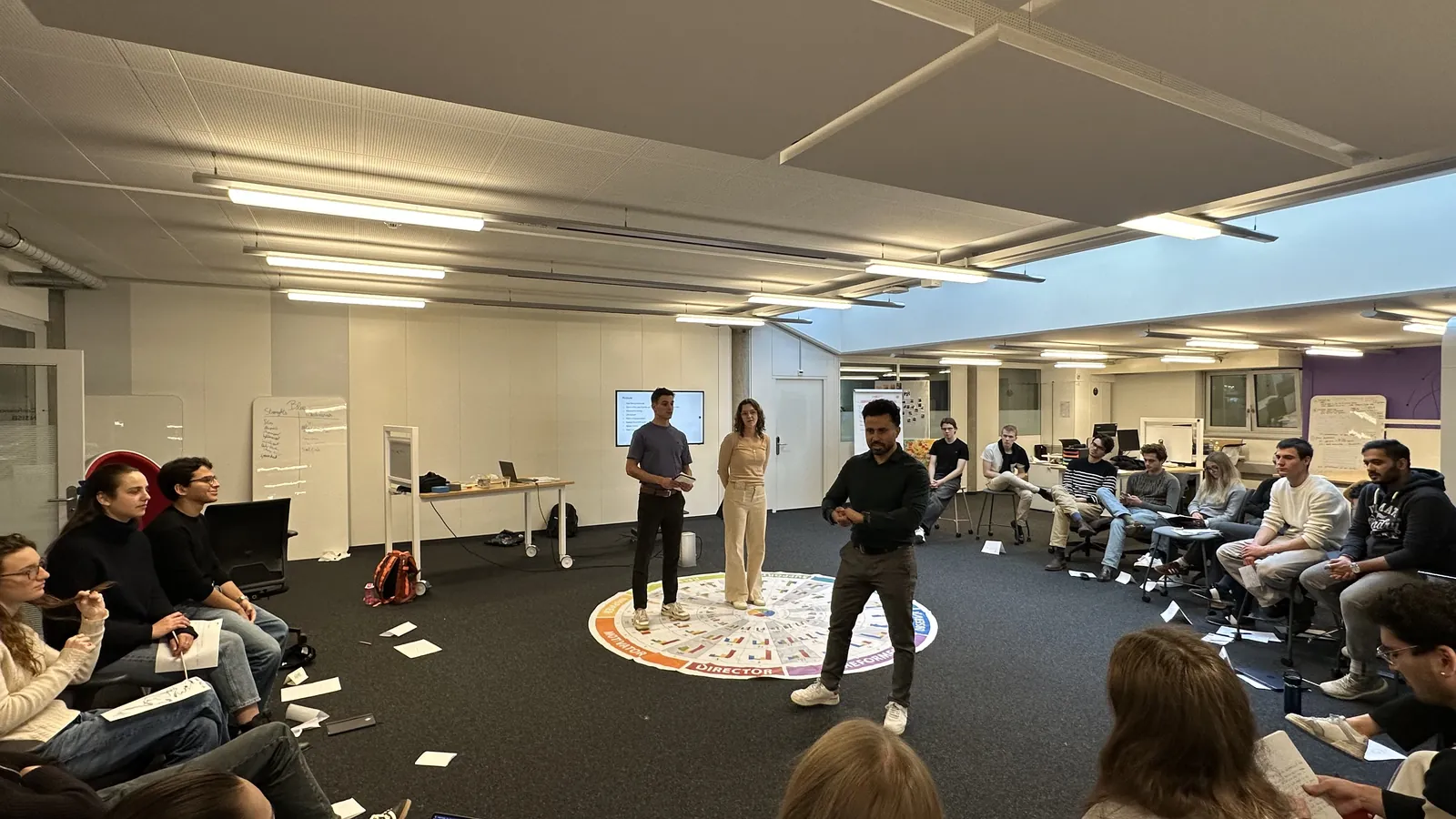
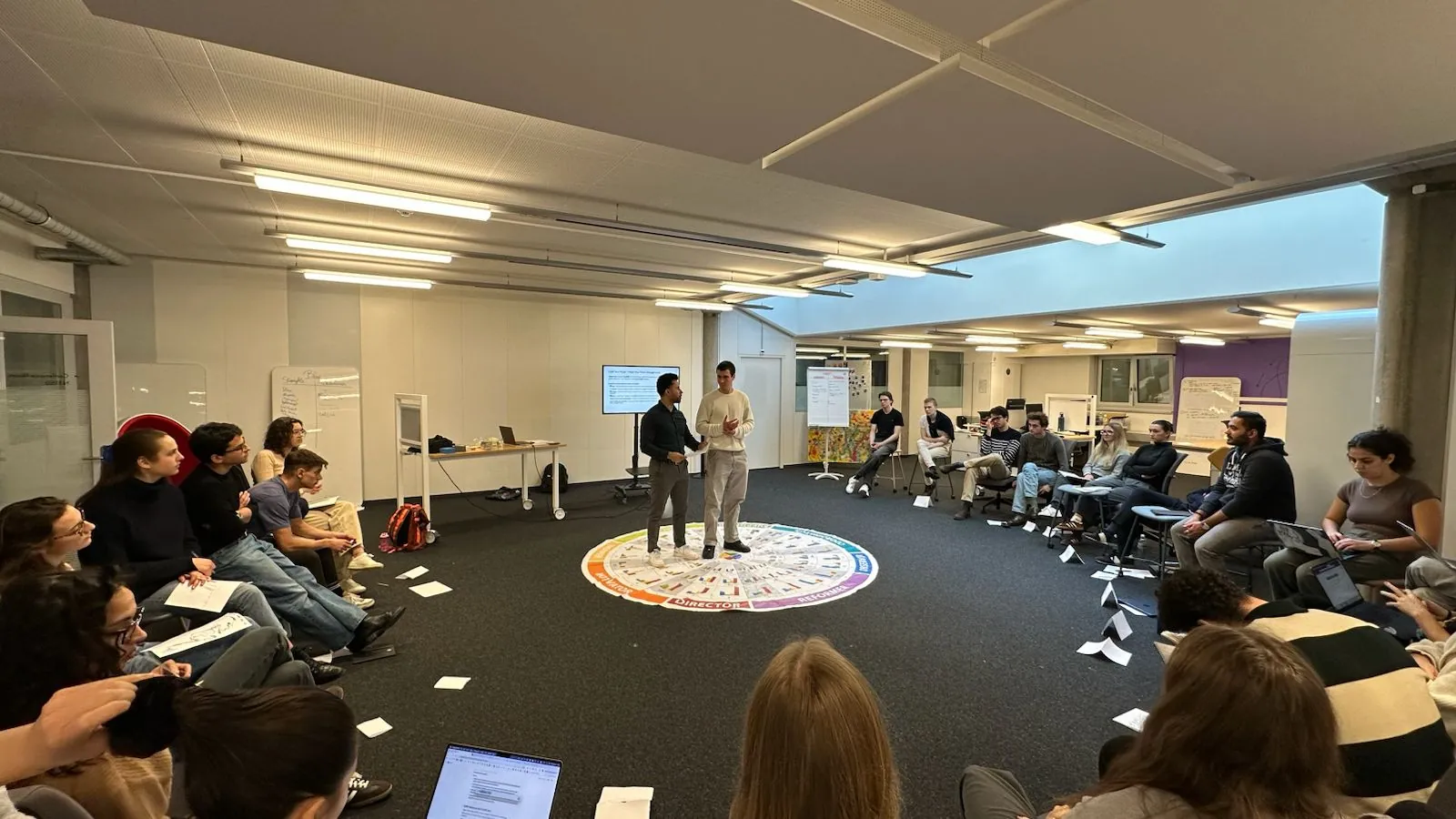
Read alone, the profile teaches you things about yourself. Read as a team, it changes the way you work together. In the Working better together with Insights Discovery workshop, everyone explores their communication style and how they may be perceived by their colleagues, then we apply those insights to your work situations.
I am an Insights Discovery practitioner and I run these team workshops in English and French, in Lausanne and across French-speaking Switzerland. Book a 30-minute call to talk about it.
Let’s talk about your situation.
A first 30-minute call to clarify your need and the format that would suit your team.
The author
Bertrand COMTE is a consultant, trainer and actor based in Lausanne. Founder of VitaMind, he works in-company in Lausanne, Geneva and across French-speaking Switzerland with executives, B2B sales teams and corporate programmes, in English and French.
Discover his backgroundRead next
 Insights Discovery
A Swiss psychiatrist, a book published in 1921, a Scottish company founded in 1993. The short history of a model your teams may already use.
 Insights Discovery
Three tools, two theoretical origins, one question: which one will really help your team work better together?
 Insights Discovery
Same message, four ways of receiving it. What helps and what irritates depending on the other person’s dominant energy.